
Introduction
Parenting young children can be incredibly rewarding—and incredibly challenging.
Toddlers and preschoolers are curious, energetic, emotional, independent, and still learning how the world works. One moment your child may be happily playing, and the next they may be crying because you gave them the “wrong” cup.
A child who was cooperative yesterday may suddenly refuse to put on their shoes today.
These moments can leave parents wondering:
“Am I doing something wrong?”
Usually, the answer is no.
Young children are still developing the language, emotional regulation, impulse control, and problem-solving skills they need to manage everyday situations. Challenging behavior is often part of that learning process.
Positive parenting doesn’t mean allowing children to do whatever they want. It means combining connection, clear boundaries, consistency, and age-appropriate expectations.

Establishing predictable routines, playing together, reading, involving children in family tasks, and giving them appropriate choices can all help create more positive experiences during the toddler and preschool years.
In this guide, we’ll explore 10 practical positive parenting tips for toddlers and preschoolers that can make everyday family life calmer while helping children develop confidence, independence, communication skills, and emotional awareness.
What Is Positive Parenting?
Positive parenting is an approach that focuses on building a strong relationship with your child while also providing clear expectations and appropriate boundaries.
It doesn’t mean saying “yes” to everything.
It doesn’t mean avoiding discipline.
And it doesn’t mean that parents should never feel frustrated.
Instead, positive parenting aims to guide children while recognizing that their abilities are still developing.
For example, instead of simply saying:
“Stop crying.”
a parent might say:
“You’re upset because we have to leave the playground. It’s hard to stop when you’re having fun.”
The boundary can remain:
“It’s time to go home.”
The difference is that the child receives both connection and guidance.
1. Set Clear and Simple Boundaries
Young children need boundaries.
Boundaries help children understand what is expected and what is safe.
However, toddlers and preschoolers generally respond better to simple, clear instructions than to long explanations.
Instead of saying: “How many times have I told you not to throw your toys around? You know you’re not supposed to do that.”
Try: “Toys are not for throwing. You can throw the ball outside.”
The second version is shorter and tells the child what they can do.
Try the “what to do” approach
Whenever possible, tell children what behavior you expect.
Instead of: “Don’t run!”
Try: “Please walk inside.”
Instead of: “Don’t hit your brother.”
Try: “Hands are for helping. You can tell him you’re upset.”
This gives children a clearer alternative.
Consistency also matters. Children learn boundaries through repetition, and parents don’t need to create a new consequence or explanation every time a rule is tested. HealthyChildren.org recommends consistent limits and age-appropriate expectations as part of effective discipline.
2. Connect Before You Correct
When children are upset, they may not be ready to listen to a long explanation. Imagine a toddler crying because it’s time to leave the park.
If the parent immediately says:
“Stop crying. We’ve been here long enough. We have to go.”

the child may become even more upset. Instead, try acknowledging the feeling first:
“You really wanted to stay longer.”
Then establish the boundary:
“It’s time to go home.”
And finally offer a small choice:
“Do you want to walk to the car or hold my hand?”
This doesn’t mean the child gets to decide whether they leave. The boundary remains. The child simply gets a small amount of appropriate control within that boundary.
3. Remember That Behavior Is Communication
One of the most helpful mindset shifts for parents is to ask:
“What might my child be communicating through this behavior?”
A toddler may not yet have the words to say: “I’m overwhelmed and I need a break.”
Instead, they may cry.
A preschooler may not say: “I’m frustrated because I can’t do this myself.”
They may throw the toy.
This doesn’t mean every difficult behavior should be excused. It means parents can respond to both the behavior and the underlying need.
Consider possible triggers such as:
- Hunger
- Tiredness
- Overstimulation
- Frustration
- Difficulty communicating
- A sudden transition
- Wanting independence
- Needing connection
Understanding possible triggers can help parents prevent some difficult moments before they escalate.
4. Create Predictable Daily Routines
Children often feel more secure when they know what to expect.
Predictable routines can make transitions easier and may reduce some everyday power struggles. The American Academy of Pediatrics notes that regular routines can help children know what comes next and support smoother transitions.
A routine doesn’t have to mean that every minute of the day is scheduled.
Instead, think about having a predictable sequence.
Morning
- Wake up
- Get dressed
- Eat breakfast
- Brush teeth
- Prepare for the day
After School or Daycare
- Snack
- Free play
- Outdoor time
- Dinner
- Quiet activity
Bedtime
- Bath
- Pajamas
- Brush teeth
- Choose a book
- Read together
- Bed
The exact routine will look different for every family.
What matters is that the child gradually learns:
“This is what happens next.”
5. Give Children Age-Appropriate Choices
Young children often want independence before they have the ability to manage complete independence. That’s where small choices can help.

Instead of asking:
“What do you want to wear?”
which may create an overwhelming number of possibilities, offer two acceptable choices:
“Would you like the blue shirt or the green shirt?”
Instead of:
“What do you want for breakfast?”
try:
“Would you like oatmeal or eggs?”
Instead of:
“Are you ready to leave?”
when you already know the answer needs to be yes, try:
“Do you want to put your shoes on first or your jacket?”
The child experiences independence while the parent maintains the larger boundary.
6. Encourage Independence Through Everyday Tasks
Children love feeling capable.
Allowing children to participate in everyday activities can build confidence while teaching practical skills.
Depending on age and ability, children might help:
- Put toys away
- Place clothes in a hamper
- Set napkins on the table
- Water plants
- Wash fruit
- Carry lightweight items
- Choose clothes
- Put books back on a shelf
- Help clean up after play
The task doesn’t have to be perfect. A three-year-old folding a towel probably won’t fold it like an adult.
That’s okay. The purpose isn’t perfection. The purpose is participation.
The opportunity to contribute helps children begin seeing themselves as capable members of the family.
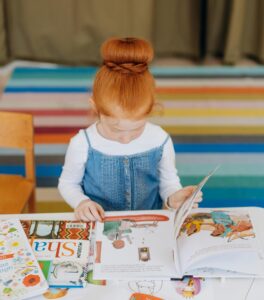
7. Make Reading Part of Everyday Family Life
Reading together is one of the simplest parenting habits you can build.
It doesn’t have to happen only at bedtime.
You can read:
- After breakfast
- Before nap time
- During quiet time
- While relaxing together
- Before bed
- During weekends
Reading provides opportunities for language development, listening, conversation, imagination, and connection. And don’t worry if your child wants the same book repeatedly.

Repetition is valuable.
A child who hears the same story many times can begin anticipating phrases, remembering characters, recognizing patterns, and participating in the reading.
You can also ask simple questions:
“What do you think happens next?”
“Where is the puppy?”
“How does she feel?”
“What was your favorite part?”
For more book ideas, this can naturally connect to your Kids’ Book Recommendations category.
8. Let Children Have Plenty of Unstructured Play
Parents sometimes feel pressure to constantly entertain or teach their children.
But children also need time to simply play.
Give your child opportunities to explore:
- Blocks
- Dolls
- Cars
- Puzzles
- Art materials
- Play dough
- Pretend kitchens
- Animal figures
- Outdoor materials
- Books
Open-ended play is particularly valuable because children can decide what to create and how to use the materials. A pile of blocks might become a house one day and a train station the next. There isn’t necessarily one correct answer.
This type of play supports creativity, decision-making, problem-solving, and imagination.
9. Help Children Learn About Big Emotions
Young children don’t automatically know how to regulate anger, frustration, disappointment, or excitement.
Emotional regulation develops gradually. Parents can help by teaching emotional vocabulary during calm moments.
For example:
“You were disappointed when the toy broke.”

“You look frustrated because the puzzle isn’t working.”
“You seem excited about going to the park.”
Over time, children begin connecting words with feelings.
During an emotional moment, keep your language simple.
You might say:
“You’re very angry. I’m here. I won’t let you hit.”
This communicates two things simultaneously:
Your feeling is allowed.
Hitting is not allowed.
The CDC’s current guidance for toddlers and preschoolers also emphasizes helping children recognize and manage emotions, including using supportive strategies when children are distressed.
10. Take Care of Your Own Parenting Energy
This tip is easy to forget.
Parents are human beings—not machines.
You can love your child deeply and still feel exhausted.
You can be patient most days and lose patience sometimes.
You can know all the “right” parenting strategies and still have difficult days.
Healthy parenting also means recognizing your own limits.
If you’re feeling overwhelmed, when it is safe to do so, take a moment to breathe, step away briefly, ask another trusted adult for help, or lower the expectations for the day.
You don’t need to create a perfect childhood.
Your child needs a parent who is present, caring, and willing to keep learning.
And when you make a mistake, repairing the relationship matters.
You can say:
“Mommy was frustrated and spoke too loudly. I’m sorry. Let’s try again.”
That teaches children something incredibly valuable:
People make mistakes, and relationships can be repaired.
What About Tantrums?
Tantrums are one of the most common challenges parents encounter during the toddler years. When a child is having a meltdown, the goal isn’t always to immediately make the crying stop.
Sometimes the first goal is simply safety and calm.
During a difficult moment:
Stay as calm as possible.
A parent’s escalating voice can add more stimulation to an already overwhelmed child.
Keep your words simple.
You don’t need a long lecture during a meltdown.
Maintain important boundaries.
If hitting isn’t allowed, the boundary remains.
Give the child time to calm down.
Once the child is calmer, you can talk about what happened and teach another way to communicate the need.
For children who are emotionally distressed, the CDC describes “time-in” as staying with the child and providing support while they calm down; for certain disruptive or harmful behaviors, time-out can be one tool used alongside other parenting strategies.
The important takeaway is that discipline and connection don’t have to be opposites.
What Parents Don’t Need to Do
There is enormous pressure on parents today.
You may see perfectly organized playrooms, elaborate educational activities, beautiful meals, strict schedules, and carefully curated parenting routines online.
But children don’t need perfection.
You don’t need to:
- Buy every educational toy
- Plan activities every hour
- Never say no
- Prevent every tantrum
- Have a perfect routine
- Make every meal from scratch
- Turn every moment into a learning activity
Sometimes the most valuable thing you can give your child is your attention.
Sit together.
Talk, laugh, read, go outside, cook, play, rest…
Those ordinary moments matter.
When Parenting Strategies Don’t Work Immediately
One of the biggest misconceptions about parenting advice is that a strategy should work instantly.
Real children aren’t predictable formulas. A routine may work beautifully for two weeks and then suddenly stop working. A strategy that works for one child may not work for another.
Developmental changes, illness, tiredness, transitions, and changes in family circumstances can all affect behavior.
Instead of asking:
“Does this strategy work?”
try asking:
“What is my child communicating, and what support does this situation require?”
Then adjust.
Parenting is an ongoing process of observing, responding, and learning.
Helpful Products for Everyday Parenting
For Routines
For Independence
- Step stools
- Child-sized utensils
- Accessible clothing organizers
- Toddler cleaning tools
- Easy-to-use water bottles
For Quiet Time
For Emotional Learning
A Simple Parenting Reminder
When the day feels difficult, remember:
Connect.
Set the boundary.
Stay consistent.
Give choices when appropriate.
Allow independence.
Keep expectations realistic.
Repair when things go wrong.
You don’t have to do everything perfectly.
❓ Frequently Asked Questions
What are the best parenting tips for toddlers?
Some of the most useful strategies include establishing predictable routines, setting simple boundaries, offering limited choices, encouraging independence, reading together, allowing free play, and helping children name and manage emotions.
How can I handle toddler tantrums?
Stay calm, prioritize safety, keep language simple, acknowledge the child’s feelings, and maintain appropriate boundaries. Once the child is calm, you can talk about what happened and practice alternative ways to communicate.
How do I encourage independence in my child?
Give children age-appropriate opportunities to make choices and participate in everyday tasks such as dressing, cleaning up toys, setting the table, or organizing their belongings.
Should parents use consequences?
Age-appropriate consequences can be part of setting boundaries. The consequence should be understandable, proportionate, and connected to the behavior whenever possible. Consistency and clear expectations are important.
Is positive parenting the same as permissive parenting?
No. Positive parenting still includes rules, boundaries, expectations, and consequences when appropriate. The difference is that the parent aims to guide the child’s behavior while maintaining connection and respect.
How can I make mornings easier with a toddler?
Prepare as much as possible the night before, use a predictable sequence, offer limited choices, and give your child enough time to participate in simple tasks. Consistent routines can make daily transitions easier for young children.
Final Thoughts
Parenting toddlers and preschoolers isn’t about finding a magic formula that makes every day easy.
There will still be tantrums.
There will be messy rooms, refused vegetables, forgotten shoes, bedtime negotiations, and moments when everyone simply needs a break.
But small changes in the way we communicate with children can make everyday life more manageable.
When children know what to expect, have opportunities to participate, receive clear boundaries, and feel connected to their parents, they have a stronger foundation for learning and growing.
The goal isn’t to raise a perfectly behaved child.
It’s to help children gradually develop the skills they need to communicate, make choices, manage emotions, solve problems, and become increasingly independent.
And perhaps most importantly, remember that parenting is a relationship, not a performance.
You don’t have to be a perfect parent. You just have to keep showing up, connecting, learning, and trying again.