Introduction
Many parents are surprised to learn that some of the best Montessori activities don’t require expensive toys or specially designed classrooms. In fact, Dr. Maria Montessori believed that children learn best through meaningful, everyday experiences that encourage independence, curiosity, and active participation.
The home provides countless opportunities for learning. From pouring water into a cup to helping prepare a snack or watering a plant, simple daily tasks become valuable lessons when children are given the chance to participate. These experiences strengthen motor skills, build confidence, and teach practical life skills that children will use for years to come.
Montessori activities are different from traditional play because they have a clear purpose. Rather than keeping children entertained, they invite exploration, concentration, and problem-solving while allowing children to learn at their own pace.
The best part is that you probably already have many of the materials you need at home. Everyday objects such as measuring cups, spoons, towels, bowls, baskets, and watering cans can become wonderful learning tools when presented thoughtfully.
In this guide, you’ll discover ten easy Montessori activities that support your toddler’s development while creating joyful moments of learning together. These activities are simple to prepare, budget-friendly, and perfect for encouraging independence in everyday life.
1. Watering Plants
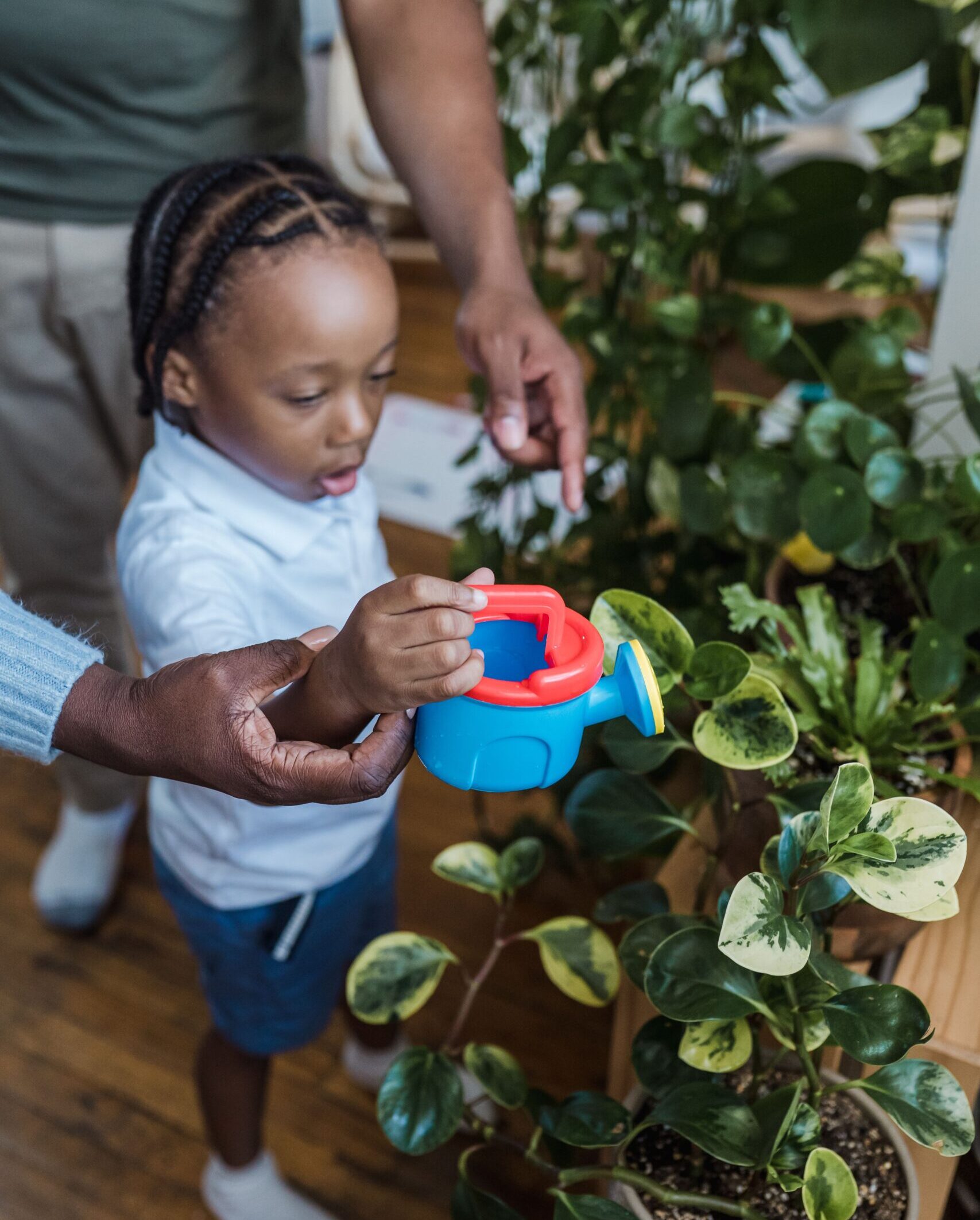
Watering plants is one of the classic Montessori practical life activities because it teaches responsibility while helping children connect with nature. Even young toddlers enjoy caring for living things, and this simple task helps them feel capable and included in the family’s daily routine.
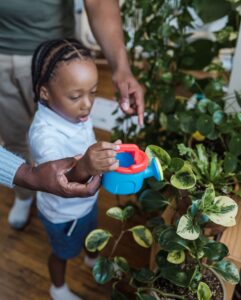
Provide your child with a small watering can that is easy to hold and only partially filled with water. Show them how to pour slowly and carefully around the base of the plant rather than onto the leaves. Over time, they will improve their control, coordination, and understanding of how plants grow.
Skills developed:
- Responsibility
- Fine motor control
- Hand-eye coordination
- Concentration
- Respect for nature
Recommended products:
- Child-sized watering can
- Small indoor plants
- Plant mister
- Wooden gardening tools
2. Transferring Beans with a Spoon
One of the simplest Montessori activities is transferring dry beans, lentils, or pom-poms from one bowl to another using a spoon. Although it looks easy, this activity requires focus, precision, and patience.
Children naturally repeat the movement many times, strengthening the muscles they will later use for writing, drawing, and self-care tasks. As they become more confident, you can increase the challenge by using tweezers or small tongs.
Skills developed:
- Fine motor skills
- Hand strength
- Concentration
- Patience
- Bilateral coordination
Recommended products:
- Wooden bowls
- Child-sized spoon
- Sorting trays
- Wooden tongs
3. Folding Towels and Washcloths
Folding towels may seem like a simple household chore, but in the Montessori philosophy, it is a meaningful practical life activity that helps children develop independence, coordination, and concentration. Young children naturally enjoy imitating the adults around them, and giving them real responsibilities helps them feel valued and capable.
Start with small washcloths or hand towels that are easy for little hands to manage. Demonstrate each fold slowly, using clear movements, and then invite your child to try. Don’t worry if the towels aren’t folded perfectly—the goal is the learning process, not perfection.
As children repeat the activity, they strengthen fine motor skills, improve hand-eye coordination, and develop an understanding of sequencing and order. Folding also encourages patience, persistence, and attention to detail.
This simple activity can become part of your family’s weekly routine, giving your child a genuine sense of contribution.
Skills developed
- Fine motor skills
- Bilateral coordination
- Sequencing
- Concentration
- Independence
- Responsibility
Recommended products:
- Child-sized laundry basket
- Wooden storage baskets
- Montessori practical life trays
- Small cotton towels
4. Washing Fruits and Vegetables
One of the best Montessori activities for toddlers is helping prepare food. Children love participating in everyday routines, and washing fruits and vegetables is both safe and educational.
Place a few apples, strawberries, or carrots in a bowl of water and let your child gently rinse them using their hands or a soft vegetable brush. Afterwards, they can dry the produce with a clean towel before placing it in another bowl.

Besides being enjoyable, this activity teaches responsibility and introduces children to healthy eating habits. They begin to understand where food comes from and feel proud of helping prepare family meals.
Many parents notice that children are more willing to taste fruits and vegetables when they have participated in preparing them.
Skills developed
- Practical life skills
- Healthy eating habits
- Fine motor control
- Hand-eye coordination
- Responsibility
Recommended products:
- Montessori learning tower
- Child-safe vegetable brush
- Wooden fruit bowl
- Child-sized apron (option 1, option 2, option 3)
- Montessori kitchen utensils
5. Pouring Water
Pouring is one of the most iconic Montessori activities because it combines concentration, coordination, and independence.
Begin with two small pitchers and a small amount of water. Demonstrate how to hold the handle with one hand while supporting the pitcher with the other. Slowly pour the water into the second pitcher without rushing.
At first, spills are completely normal. In Montessori, mistakes are viewed as valuable learning opportunities rather than failures. Simply provide a sponge or cloth so your child can clean up independently.
As children gain confidence, you can gradually introduce different materials such as rice, oats, or beans before progressing to larger containers.
This activity prepares children for many everyday tasks, from serving drinks at meals to helping in the kitchen.
Skills developed
- Hand-eye coordination
- Fine motor development
- Concentration
- Self-confidence
- Independence
Recommended Products:
- Small stainless steel pitchers
- Child-sized tray
- Montessori pouring set
- Silicone placemat
- Small sponge
6. Matching Socks
Laundry offers another wonderful opportunity for Montessori learning. Matching clean socks encourages observation, problem-solving, and visual discrimination.

Spread several pairs of socks on the floor or a table and invite your child to find the matching pairs. Younger toddlers may start with just three or four pairs, while older preschoolers can work with larger collections.
Once the socks are matched, children can practice folding them together and placing them into a basket or drawer.
This simple household activity helps children feel included while strengthening important cognitive skills.
Skills developed
- Visual discrimination
- Memory
- Sorting and matching
- Concentration
- Organization
Recommended Products:
7. Cleaning Windows
Toddlers love cleaning because it allows them to imitate the adults they admire.
Fill a small spray bottle with water and provide a child-sized microfiber cloth. Show your child how to spray once or twice onto a low window or mirror before wiping it clean using slow circular movements.
Besides being fun, this activity strengthens arm muscles, improves coordination, and encourages responsibility for caring for the home.
Children often repeat this activity for surprisingly long periods because they enjoy seeing immediate results from their work.
Skills developed
- Gross motor coordination
- Fine motor control
- Practical life skills
- Responsibility
- Concentration
Recommended Products:
8. Nature Collage
Nature provides endless learning opportunities, and creating a nature collage is a beautiful way to combine sensory exploration with creativity.
Take a walk outdoors together and encourage your child to collect interesting leaves, flowers, small sticks, feathers, or pinecones. Once home, provide paper and child-safe glue so they can arrange their discoveries into a unique piece of art.
Unlike traditional crafts that focus on creating a specific outcome, Montessori-inspired art values exploration and creativity. There is no “right” way to complete the activity.
As children compare colors, textures, and shapes, they also build observation skills and deepen their appreciation for the natural world.
Skills developed
- Creativity
- Observation
- Fine motor skills
- Sensory exploration
- Appreciation for nature
Recommended Products:
- Child-safe glue
- Nature collection tray
- Magnifying glass
- Wooden art tray
9. Create a Montessori Book Basket
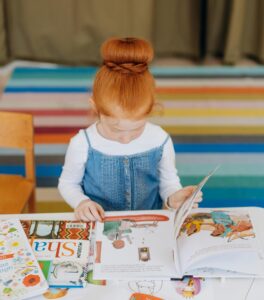
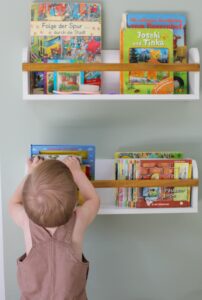
One of the simplest ways to encourage a lifelong love of reading is by creating a Montessori-inspired book basket. Instead of storing books on high shelves or inside toy boxes, place a small selection of books in a low basket or front-facing bookshelf where your child can easily see and reach them.
Children are naturally more interested in books when the covers are visible. Rotating the selection every week or two also keeps reading fresh and exciting without the need to constantly buy new books.
Choose books that reflect your child’s current interests while also introducing new topics. Stories about animals, nature, family life, emotions, and everyday experiences often capture toddlers’ attention. Board books with realistic illustrations, simple language, and engaging pictures are excellent choices for younger children.
Creating a cozy reading corner with a soft rug, a small chair, or a floor cushion makes reading even more inviting. This quiet space encourages children to explore books independently while also becoming a wonderful place for shared reading time with parents.
Reading together not only strengthens language development but also builds emotional connections, expands vocabulary, and supports imagination.
Skills Developed
- Language development
- Vocabulary growth
- Listening skills
- Concentration
- Independence
- Love of reading
Recommended Products:
- Front-facing Montessori bookshelf
- Children’s book basket
- Floor cushion
- Reading nook tent
- Board books
- Wooden book display (option 1, option 2, option 3)
10. Rotate Toys Instead of Buying More
Many parents believe children need lots of toys to stay entertained. Ironically, the opposite is often true.
When children have access to too many toys at once, they can become overwhelmed and move quickly from one activity to another without fully engaging. A toy rotation system helps maintain interest while encouraging deeper, more meaningful play.
Instead of displaying every toy, keep only six to ten carefully selected toys on accessible shelves. Store the remaining toys in labeled bins or containers and rotate them every one or two weeks.
When familiar toys reappear after being stored away, children often play with them as if they were brand new. This approach reduces clutter, saves money, and encourages longer periods of focused play.
Toy rotation also makes it easier for parents to observe which materials truly support their child’s interests and developmental stage.
Remember, in Montessori education, quality always matters more than quantity.
Skills Developed
- Concentration
- Decision-making
- Independent play
- Creativity
- Organization
Recommended Products:
- Wooden toy shelf
- Storage baskets
- Toy organizers (option 1, option 2, option 3)
- Wooden trays
- Fabric storage bins (option 1, option 2, option 3)
Benefits of Montessori Activities at Home
Montessori activities offer much more than entertainment. Every practical task, sensory experience, or hands-on activity contributes to a child’s overall development in meaningful ways.
When children are encouraged to participate in everyday life, they begin to see themselves as capable individuals. Instead of waiting for adults to do everything for them, they learn that they can contribute, solve problems, and care for themselves and their environment.
Some of the greatest benefits of Montessori activities include:
- Building confidence through real accomplishments.
- Encouraging independence from an early age.
- Strengthening fine and gross motor skills.
- Improving focus and attention span.
- Developing problem-solving and critical thinking skills.
- Expanding language through everyday conversations.
- Promoting responsibility and respect for others.
- Supporting emotional regulation through calm, purposeful activities.
- Creating meaningful opportunities for parent-child bonding.
Perhaps most importantly, Montessori activities nurture a genuine love of learning. Rather than rewarding children with prizes or encouraging competition, these activities help children discover the joy of learning simply because they are curious about the world around them.
Simple Materials That Make Montessori Activities Easier
One of the biggest misconceptions about Montessori is that families need expensive educational materials. In reality, many of the best activities use ordinary household items combined with thoughtful presentation.
However, a few well-chosen materials can make everyday activities even more enjoyable and accessible for young children.
Some family favorites include:
- Child-sized wooden trays
- Small pitchers for pouring activities
- Wooden bowls
- Child-safe kitchen utensils
- Learning tower
- Wooden step stool
- Child-sized apron
- Small watering can
- Child-sized broom and dustpan
- Wooden tongs
- Sensory bins
- Open wooden shelves
- Front-facing bookshelves
- Storage baskets
- Wooden puzzles
- Measuring cups and spoons
These are products you’ll naturally be able to recommend throughout your blog, especially if you join affiliate programs such as Amazon Associates. By mentioning them within helpful educational content, recommendations feel useful rather than promotional.
Common Mistakes Parents Make When Trying Montessori at Home
Parents often feel pressure to create a “perfect” Montessori home, but perfection has never been part of the Montessori philosophy. Here are a few common mistakes to avoid:
Doing Everything for the Child
Although helping is a natural instinct, constantly stepping in can limit opportunities for children to build independence. Whenever possible, allow your child to try first, even if the task takes a little longer.
Offering Too Many Choices
Choice is important, but too many options can be overwhelming. Offering two or three activities at a time helps children make decisions more confidently.
Expecting Immediate Results
Independence develops gradually. A child may need many opportunities to practice before mastering a new skill. Patience and consistency are essential.
Interrupting Concentration
When children are deeply focused on an activity, avoid interrupting unless necessary. Concentration is one of the most valuable skills Montessori encourages.
Buying Every Montessori Product
Beautiful materials can be helpful, but they are not what makes a home Montessori. A respectful environment, meaningful routines, and opportunities for independence are far more important than expensive furniture or toys.
❓Frequently Asked Questions
At what age can I start Montessori activities at home?
Montessori principles can be introduced from infancy, with activities becoming more hands-on and practical as children grow. Toddlers naturally enjoy practical life tasks that encourage movement and independence.
Do I need expensive Montessori toys?
No. Many of the best Montessori activities use everyday household items such as bowls, spoons, towels, pitchers, and baskets. Carefully chosen materials are often more valuable than expensive toys.
How long should Montessori activities last?
Follow your child’s interest. Some toddlers may focus for five minutes, while others remain engaged for thirty minutes or more. The goal is quality engagement rather than a specific amount of time.
Can Montessori activities replace traditional toys?
Not necessarily. Many families successfully combine Montessori-inspired materials with other toys. The important thing is to provide opportunities for open-ended play, creativity, and independent learning.
How many Montessori activities should I offer each day?
There is no perfect number. Even one meaningful activity each day can support your child’s development. Everyday moments like helping prepare lunch or watering plants are valuable learning experiences.
Connect These Activities to Everyday Family Life
One of the greatest strengths of Montessori is that learning doesn’t happen only during “activity time.” Every moment of the day can become an opportunity for growth.
Inviting your toddler to help set the table, put groceries away, feed a pet, or organize toys teaches far more than practical skills. These shared experiences build confidence, strengthen family relationships, and help children feel like important contributors to the household.
As your child becomes more capable, you’ll likely notice increased independence, stronger problem-solving abilities, and a growing sense of responsibility. Small daily moments often become the lessons children remember most.
Final Thoughts
Montessori activities at home don’t have to be complicated or expensive to make a lasting impact. The most meaningful learning experiences often come from simple, purposeful tasks that invite children to explore, participate, and discover the world around them.
Whether your toddler is watering a plant, matching socks, pouring water, or reading independently from a carefully prepared book basket, each activity builds essential life skills while encouraging confidence and curiosity.
Remember that Montessori is not about creating the perfect home or following strict rules. It’s about respecting your child’s natural desire to learn, providing opportunities for independence, and embracing the everyday moments that shape lifelong learners.
Start with one or two activities, observe what captures your child’s interest, and enjoy watching their confidence grow. Over time, these small experiences become the foundation for independence, responsibility, and a genuine love of learning.