Introduction
Many parents discover the Montessori philosophy through educational toys, beautiful classrooms, or social media photos of perfectly organized playrooms. While these images can be inspiring, they often create the impression that building a Montessori home requires expensive furniture, carefully designed spaces, or an entirely different lifestyle.
Fortunately, that couldn’t be further from the truth.
A Montessori home isn’t defined by designer shelves, wooden toys, or picture-perfect interiors. Instead, it’s an environment thoughtfully prepared to support a child’s natural development, encourage independence, and foster confidence through everyday experiences.
The beauty of Montessori lies in its simplicity. Small, intentional changes—such as placing books within a child’s reach, providing child-sized tools, or inviting children to participate in daily household routines—can make a remarkable difference in how they learn and interact with the world.
Creating a Montessori-inspired home doesn’t mean transforming every room overnight. It means gradually adapting your environment to meet your child’s developmental needs while encouraging curiosity, responsibility, and self-confidence.
In this guide, you’ll discover practical room-by-room ideas that any family can implement, regardless of the size of their home or budget. Whether you’re just beginning your Montessori journey or looking for fresh inspiration, these simple strategies will help you create a home where learning becomes a natural part of everyday life.
What Is a Montessori Home?
A Montessori home is much more than a decorating style—it is a way of thinking about how children interact with their environment.
In the Montessori philosophy, children are viewed as naturally curious, capable, and eager to learn. Instead of relying on constant adult direction, they thrive when given opportunities to make choices, solve problems, and participate in meaningful daily activities.
A Montessori-inspired environment supports this process by being:
- Safe and accessible
- Calm and organized
- Adapted to the child’s size
- Rich in opportunities for independence
- Filled with purposeful activities rather than constant entertainment
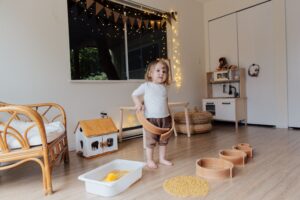
Rather than asking, “How can I keep my child busy?” Montessori encourages parents to ask, “How can I prepare my home so my child can participate in everyday life?”
This shift in perspective is what makes Montessori so powerful. Instead of separating children from adult life, it gently invites them to become active, capable members of the family.
Even simple adjustments—such as placing a small stool near the sink, keeping books on low shelves, or allowing children to help prepare snacks—teach responsibility, confidence, and practical skills that will benefit them for years to come.
The Core Principles of a Montessori Home
Before organizing individual rooms, it’s helpful to understand the key principles that guide every Montessori-inspired space.
Independence
Children naturally want to do things by themselves. Providing child-sized tools, accessible storage, and opportunities to make choices allows them to develop confidence through real experiences.
Order
A calm and organized environment helps children understand where things belong and reduces unnecessary distractions. Simple routines and clearly arranged materials also support concentration.
Freedom Within Limits
Montessori encourages children to make choices, but within safe and respectful boundaries. This balance helps them develop responsibility alongside independence.
Respect for the Child
Children deserve the same respect we offer adults. Giving them time to try, listening to their ideas, and allowing them to solve age-appropriate problems builds trust and self-esteem.
Real-Life Learning
Many of the best learning opportunities happen during ordinary daily routines—cooking, cleaning, gardening, dressing, and organizing. These practical life experiences teach valuable skills while strengthening family relationships.
The Living Room: A Space for Connection and Exploration
The living room is often where families spend the most time together, making it an ideal place to introduce Montessori principles.
Rather than filling the room with an overwhelming number of toys, consider creating a calm, welcoming space that encourages meaningful play and family interaction.
A low shelf with a carefully chosen selection of toys allows children to choose activities independently and return them when finished. Rotating toys every few weeks helps maintain interest without creating clutter.
Books can be displayed on a front-facing bookshelf so children can easily see the covers and select what they’d like to read. Adding a soft rug, floor cushions, or a cozy reading corner encourages quiet moments of exploration and shared reading.
Natural elements such as plants, wooden materials, and baskets help create a peaceful atmosphere while introducing children to different textures and caring for their environment.
Recommended Products
- Low Montessori toy shelf
- Front-facing bookshelf
- Storage baskets (option 1, option 2, option 3)
- Wooden toy organizer
- Floor cushions
- Indoor child-safe plants
The Bathroom: Encouraging Independence Through Daily Routines
The bathroom may not be the first place parents think of when creating a Montessori home, but it offers countless opportunities for children to practice independence and self-care. Everyday routines like washing hands, brushing teeth, and combing hair become valuable learning experiences when children can participate without relying entirely on an adult.
One of the easiest changes is adding a sturdy step stool so your child can safely reach the sink. Pair it with a small towel hook at your child’s height, a child-sized toothbrush, and a cup they can easily hold. These simple adjustments send a powerful message: “You can do this yourself.”
Instead of rushing through hygiene routines, allow extra time for your child to practice. Learning to squeeze toothpaste, wash hands thoroughly, or dry their face independently may take longer at first, but repetition builds confidence and competence.
A calm, organized bathroom also encourages responsibility. Keeping only a few essentials within reach helps children stay focused and reduces unnecessary distractions.
Simple Montessori Bathroom Ideas
- Place a non-slip step stool by the sink.
- Hang towels at your child’s height.
- Use child-sized brushes and cups.
- Store toiletries in small baskets.
- Add a mirror positioned at eye level.
Recommended Products:
- Wooden or bamboo step stool
- Child-sized toothbrush set
- Small rinse cup
- Montessori mirror
- Storage baskets
- Natural cotton hand towels
The Bedroom: Creating a Peaceful Space for Independence
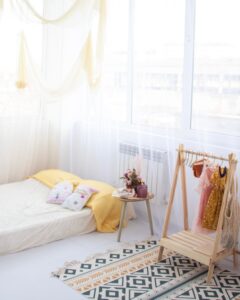
A Montessori bedroom is designed to help children feel secure, capable, and independent. Rather than being a room where everything is controlled by adults, it becomes a space children can comfortably navigate on their own.
One of the most recognizable Montessori features is the floor bed. Because children can get in and out of bed independently, they develop confidence and begin learning to listen to their own sleep cues. While a floor bed isn’t required, the underlying principle is accessibility.
Furniture should be simple, safe, and appropriately sized. A low shelf with a few carefully chosen books and toys allows children to make independent choices without becoming overwhelmed.
Keeping clothing in low drawers or baskets also encourages children to participate in getting dressed. Even toddlers can begin selecting between two weather-appropriate outfits, giving them opportunities to practice decision-making.
Soft, neutral colors and minimal decorations create a calming atmosphere that supports better rest and concentration.
Montessori Bedroom Ideas
- Use low, accessible furniture.
- Keep only a few toys available.
- Display books with covers facing outward.
- Store clothing where children can reach it.
- Include natural light whenever possible.
Recommended Products:
- Montessori floor bed (option 1, option 2, option 3)
- Front-facing bookshelf
- Wooden clothing rack
- Toy shelf
- Soft rug
- Reading cushion (option 1, option 2, option 3)
The Kitchen: One of the Best Montessori Classrooms
The kitchen is one of the richest learning environments in any home. It offers endless opportunities for children to develop practical life skills while becoming active participants in family routines.
Even toddlers can help wash vegetables, stir ingredients, peel bananas, pour water, or set the table. These everyday tasks strengthen coordination while teaching responsibility, patience, and independence.
Rather than keeping children out of the kitchen, Montessori encourages inviting them into the process using child-sized tools and careful supervision.
A learning tower or sturdy kitchen stool allows children to safely observe and participate at counter height. Small pitchers, child-safe knives, and lightweight dishes make it easier for little hands to succeed.
Cooking together also supports language development, early math concepts, sequencing, and healthy eating habits.
Kitchen Activities for Toddlers
- Washing fruits and vegetables
- Pouring water
- Mixing ingredients
- Spreading butter
- Peeling bananas
- Setting the table
- Wiping the table after meals
Recommended Products:
- Montessori learning tower
- Child-safe knife set
- Small wooden cutting board
- Mini whisk
- Child-sized apron (option 1, option 2, option 3)
- Stainless steel pitcher
The Playroom: Less Toys, More Learning
Many parents assume that more toys lead to better learning, but research and Montessori philosophy suggest otherwise. When children have access to too many toys at once, they often become distracted and move quickly from one activity to another.
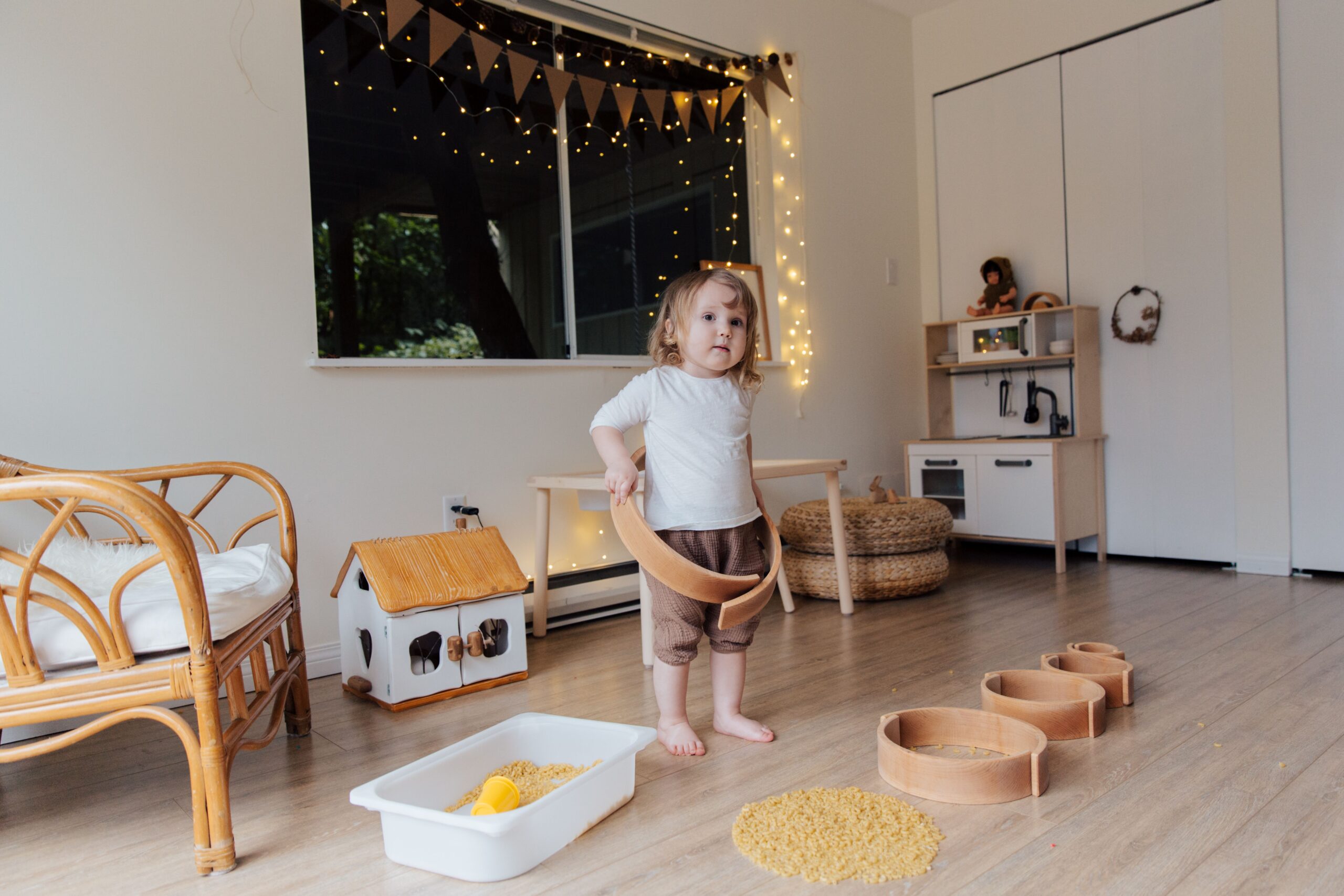
A Montessori-inspired playroom focuses on quality over quantity. Instead of overflowing toy bins, materials are displayed neatly on low shelves where children can clearly see each option.
Rotating toys every one or two weeks keeps the environment fresh without constantly purchasing new items.
Choose toys that encourage creativity, concentration, and problem-solving rather than passive entertainment. Wooden blocks, puzzles, practical life materials, and open-ended toys often remain engaging for much longer than electronic toys with lights and sounds.
The goal is to create an environment that invites deep, meaningful play.
Playroom Essentials
- Low shelves
- Toy rotation system
- Open-ended toys
- Wooden puzzles
- Building blocks
- Basket organization
Recommended Products
- Montessori toy shelf
- Wooden blocks
- Shape sorters
- Puzzle storage trays
- Wicker baskets
- Wooden rainbow stacker
Outdoor Spaces: Nature as the Best Classroom
Children learn best when they can explore the natural world with all their senses. A backyard, balcony, local park, or community garden can become an extension of your Montessori home.
Outdoor experiences encourage observation, movement, curiosity, and respect for nature. Rather than relying on structured entertainment, children discover how plants grow, how insects move, and how weather changes from day to day.
Simple activities include:
- Watering flowers
- Planting herbs
- Collecting leaves
- Watching birds
- Digging in the soil
- Nature walks
- Gardening together
Nature also provides endless sensory experiences that support brain development while helping children feel calm and connected to their environment.
Recommended Products:
- Child-sized watering can
- Gardening tool set
- Nature observation kit
- Magnifying glass
- Gardening gloves
- Bug viewer

Montessori Is About the Family, Not Just the Child
One of the biggest misconceptions about Montessori is that it only focuses on children’s independence. In reality, Montessori strengthens family relationships because children become active participants in everyday life rather than passive observers.
When children help prepare meals, care for plants, fold laundry, or organize their toys, they aren’t simply completing chores—they’re contributing to the family.
These shared experiences build communication, empathy, confidence, and responsibility while creating meaningful memories together.
Parents often discover that slowing down and allowing children to participate leads to fewer power struggles and more cooperation over time.
Common Mistakes When Creating a Montessori Home
Many parents unintentionally overcomplicate Montessori. Here are a few common mistakes to avoid:
Trying to Make Everything Perfect
A Montessori home doesn’t have to look like the photos on social media. Progress matters far more than perfection.
Buying Too Much
Montessori isn’t about purchasing expensive furniture or toys. Start with what you already have and make thoughtful improvements over time.
Doing Everything for Your Child
Although helping feels natural, allowing children to try independently is how confidence grows.
Offering Too Many Toys
A carefully prepared environment with fewer options often leads to deeper concentration and more meaningful play.
Forgetting That Montessori Is Flexible
Every family is different. Montessori should support your family’s lifestyle—not create unnecessary stress.
❓ Frequently Asked Questions
Do I need a Montessori floor bed?
No. While floor beds encourage independence, they are only one possible element of a Montessori-inspired bedroom.
Is Montessori expensive?
Not at all. Many Montessori principles involve changing routines rather than buying products. Everyday household items can become valuable learning materials.
At what age can I create a Montessori home?
You can begin from infancy and continue adapting the environment as your child grows.
Can I combine Montessori with other parenting styles?
Absolutely. Many families incorporate Montessori principles alongside their own parenting values and routines.
What’s the most important part of a Montessori home?
The environment matters, but your attitude matters even more. Respect, patience, encouragement, and opportunities for independence are the true foundations of Montessori.
Recommended Montessori Home Essentials
If you’re just getting started, you don’t need to buy everything at once. Begin with a few carefully chosen items that encourage independence and meaningful participation in everyday life.
Some of our favorite Montessori home essentials include:
- Montessori learning tower
- Front-facing bookshelf
- Wooden toy shelf
- Child-sized broom and dustpan
- Step stool for the bathroom and kitchen
- Wooden puzzles
- Open-ended building blocks
- Watering can
- Child-safe kitchen tools
- Storage baskets
- Wooden trays
- Floor cushions
- Practical life activity sets
These simple products can make everyday routines more accessible while supporting your child’s natural desire to learn and contribute.
Final Thoughts
Creating a Montessori home isn’t about achieving perfection or filling your house with expensive educational materials. It’s about preparing an environment where your child feels capable, respected, and encouraged to participate in everyday life.
Whether you start by organizing a low bookshelf, inviting your toddler to help prepare lunch, or placing a step stool near the sink, every small change helps nurture confidence, independence, and a lifelong love of learning.
Remember that Montessori is a journey, not a destination. As your child grows, your home will naturally evolve to meet their changing needs and interests.
The most important ingredient isn’t the furniture or the toys—it’s your willingness to slow down, trust your child, and create opportunities for meaningful learning through everyday experiences.