Introduction
Sometimes the simplest activities are the ones that keep young children interested the longest.
A container filled with dry rice, scoops, cups, and a few hidden objects can become an afternoon of exploration. A bin filled with water and floating toys can turn an ordinary day into an opportunity to investigate, pour, scoop, and discover. Even natural materials collected during a walk can become the starting point for creative sensory play.
These are examples of sensory bins—simple play setups that invite children to explore materials using their hands, eyes, ears, and sometimes their sense of smell.
Sensory play gives young children opportunities to actively explore the properties of materials while they play. Research and guidance from early childhood organizations such as NAEYC emphasize that play supports children’s physical, cognitive, language, social, and emotional development. Sensory experiences can also encourage children to investigate, make predictions, use descriptive language, and develop fine motor skills.
The best part?
You don’t need expensive toys or complicated supplies to create a sensory bin.
With a few everyday materials and some thoughtful preparation, parents can create engaging sensory experiences at home.
In this guide, you’ll learn what sensory bins are, how they support early learning, what materials to use, and how to create 12 simple sensory bin activities for toddlers and preschoolers.
What Is a Sensory Bin?
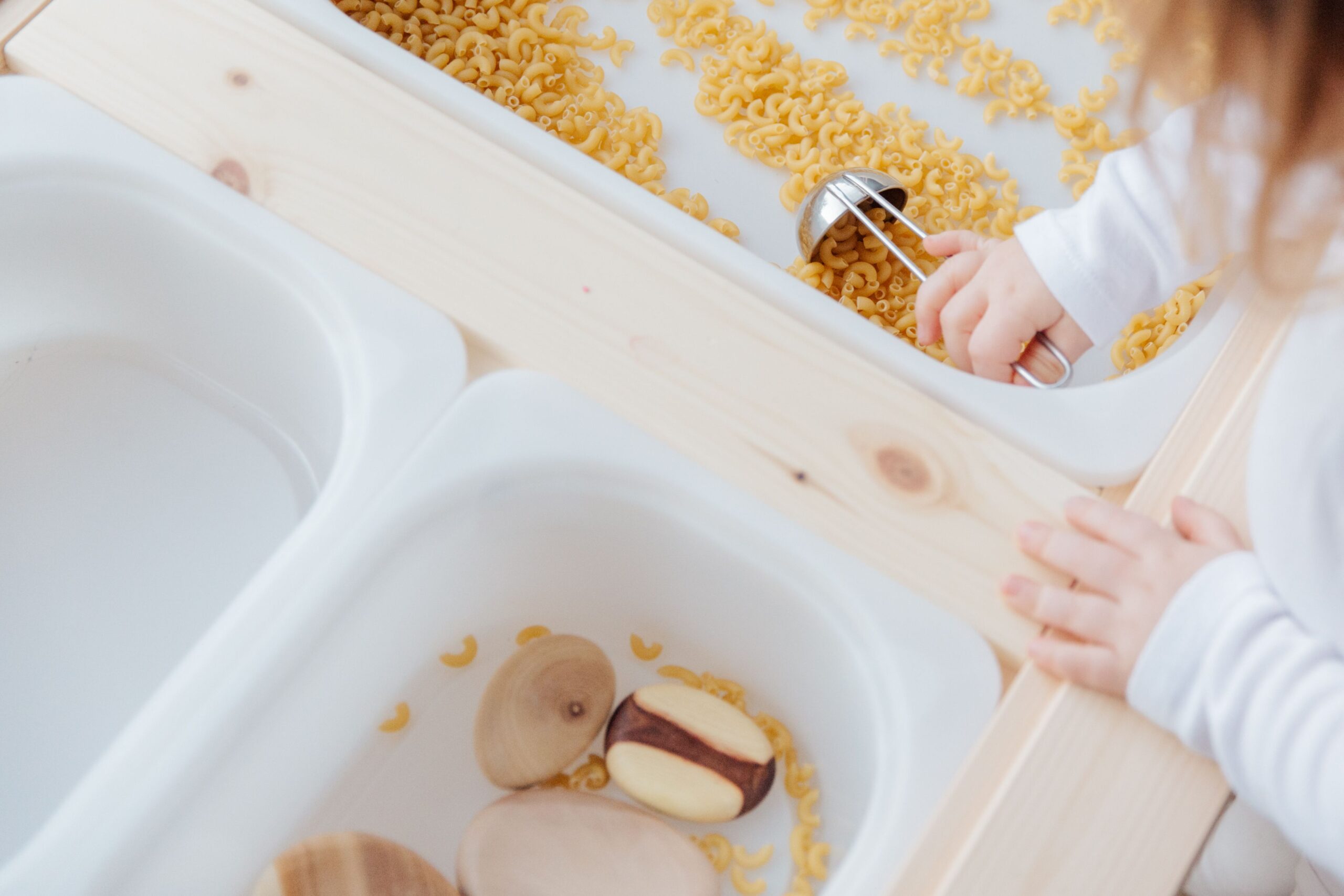
A sensory bin is a container or play tray filled with materials that children can explore through their senses.
The container might include:
- A base material such as rice, oats, sand, or water
- Scoops, cups, spoons, or tongs
- Small containers
- Objects to find or sort
- Natural materials
- Toys related to a particular theme
- Tools for pouring, transferring, digging, or mixing
The goal isn’t necessarily to complete a specific project.
Instead, children are encouraged to touch, scoop, pour, move, compare, discover, and experiment.
For example, a child playing with a rice sensory bin might spend several minutes simply filling a cup and emptying it. Another child might hide toy animals under the rice and search for them.
A preschooler might sort objects by color or size. There isn’t necessarily one “correct” way to play. That freedom is one of the reasons sensory play can be so engaging.
Why Is Sensory Play Important for Young Children?
Sensory play is much more than simply making a mess.
When children manipulate different materials, they are actively learning about their environment.
Sensory play can support:
- Fine motor development
- Hand and finger strength
- Hand-eye coordination
- Problem-solving
- Early math concepts
- Language development
- Scientific thinking
- Attention and concentration
- Creativity
- Independent exploration
NAEYC describes play as an important context for developing language, cognitive, social, emotional, and physical skills. Play also gives children opportunities to investigate their surroundings and practice emerging abilities.
Sensory activities can be especially valuable because children aren’t simply watching something happen.
They are doing the exploring themselves.
1. Sensory Bins Encourage Fine Motor Skills
Many sensory bin activities naturally involve movements such as:

- Scooping
- Pouring
- Pinching
- Grasping
- Picking up objects
- Using tongs
- Stirring
- Transferring materials
- Opening and closing containers
These small movements require children to coordinate their fingers and hands.
For example, picking up small objects with child-safe tongs requires control and hand-eye coordination. Pouring rice from one container into another requires children to control the movement of their hands while watching what happens.
These experiences can help children practice the physical skills they use in everyday activities.
2. Sensory Play Encourages Observation
Sensory materials give children opportunities to notice differences.
You might ask:
“Which one feels softer?”
“Which container holds more?”
“What happens when you pour the water?”
“Which objects are floating?”
“What changed when we added water?”
These simple observations introduce children to concepts related to science and mathematics without turning playtime into a formal lesson.
Children can learn through experimentation. They make a prediction. They try something. They observe the result. Then they try again.
NAEYC notes that children naturally explore science concepts through play, including prediction, measurement, and experimentation.
3. Sensory Bins Can Build Language
Sensory play also creates countless opportunities for conversation.
Imagine your child is playing with a bin of dry oats.
You might describe what you see:
“The oats are falling into the cup.”
Then you can introduce descriptive words:
- Soft
- Rough
- Smooth
- Wet
- Dry
- Heavy
- Light
- Full
- Empty
- Warm
- Cold
- Sticky
- Crunchy
For older toddlers and preschoolers, you can ask questions such as:
“What do you think is underneath?”
“Which cup has more?”
“What happens if you use the big spoon?”
“Can you find something red?”
Talking during play gives children opportunities to hear and practice new vocabulary. And you don’t need to turn every activity into a quiz.
Sometimes simply describing what your child is doing is enough.
4. Sensory Play Supports Problem-Solving
Sensory bins often create little problems for children to solve.
For example:
A toy is buried under the rice.
How will your child find it?
A container is full.
How can they transfer the material without spilling it?
A toy doesn’t fit inside a cup.
What could they try instead?
Water keeps overflowing.
What happens if they use a smaller container?
These situations encourage children to experiment and adjust their actions. The child doesn’t necessarily need an adult to provide the answer.
Give them time to try.
5. Sensory Play Encourages Creativity
Sensory bins don’t always need to have a specific theme.
A simple bin of materials can become many different things depending on the child’s imagination.
Rice can become:
- Soup
- Snow
- Sand
- A construction site
- Animal food
- Treasure
Water can become:
- A pond
- A car wash
- A kitchen
- A swimming pool
- A pretend ocean
This open-ended quality gives children room to create their own stories and play scenarios.
Child-led play can also support independence, confidence, and parent-child connection. The CDC recommends allowing children opportunities to take the lead in age-appropriate play.
12 Easy Sensory Bin Ideas for Toddlers and Preschoolers
You don’t need to prepare a new sensory activity every day. One well-prepared bin can provide several different play experiences.
Here are 12 ideas to try.
1. Dry Rice Sensory Bin
Dry rice is a classic sensory bin material because it is easy to scoop, pour, and transfer.
You will need:
- A large shallow container
- Dry rice
- Cups
- Spoons
- Scoops
- Small containers
How to play:
Invite your child to scoop the rice into different containers. They can fill, empty, transfer, mix, and experiment.
For preschoolers, you can add simple challenges:
“Can you fill the cup halfway?”
“Which container holds more?”
“Can you find three blue objects?”
Skills explored:
- Fine motor coordination
- Hand-eye coordination
- Early math concepts
- Vocabulary
- Independent exploration
2. Water Sensory Bin
Water play can be incredibly engaging for young children.
You will need:
- A shallow container
- Water
- Cups
- Spoons
- Small pitchers
- Sponges
- Floating toys
Place the bin on a surface that can get wet, preferably outdoors or in an easy-to-clean area. Let your child pour water from one container to another.
They can squeeze a sponge, fill cups, or investigate which objects float and which sink.
Try asking:
“What do you think will happen?”
“Does the sponge float?”
“What happens when you squeeze it?”
Water play gives children opportunities to explore concepts such as volume, movement, and cause and effect.
Safety: Young children should always be closely supervised around water. The CDC specifically advises that toddlers should not be left near water without someone watching them.
3. Nature Sensory Bin
You don’t always need to buy sensory materials. Nature can provide plenty of interesting textures.
During a walk, you can collect larger age-appropriate natural items such as:

- Leaves
- Pinecones
- Large smooth stones
- Sticks
- Large seed pods
Place them in a shallow container and invite your child to investigate.
Ask:
“Which one feels rough?”
“Which leaf is bigger?”
“Which one is heavier?”
You can also create a simple nature sorting activity by grouping objects according to size, texture, or type.
Nature-based sensory exploration can give young children opportunities to touch, observe, hear, and investigate their surroundings.
4. Animal Rescue Sensory Bin
This one is especially fun for children who love animals.
You will need:
- A sensory base such as rice or oats
- Large animal figures appropriate for your child’s age
- Cups or scoops
- A small container
Hide several animals beneath the sensory material.
Tell your child:
“The animals are hiding! Can you rescue them?”
Your child can dig through the material to find each animal. Once they find them, encourage pretend play.
Where does the bear live?
What does the cow eat?
Which animal is the biggest?
This activity combines sensory exploration with imaginative play and language.
5. Construction Site Sensory Bin
For children who love trucks and building, create a miniature construction site.
You will need:
- Kinetic sand or another age-appropriate sensory base
- Toy construction vehicles
- Cups
- Scoops
- Large blocks or other safe building materials
Children can pretend to:
- Dig
- Move materials
- Build roads
- Fill trucks
- Transport materials
You can introduce vocabulary such as:
dig, dump, carry, heavy, tall, wide, under, over, next to.
The activity can also encourage storytelling and problem-solving.
6. Ice Exploration Bin
This is a wonderful warm-weather activity.
You will need:
- Ice cubes
- A shallow container
- Water
- Cups
- Spoons
- Large waterproof toys
Place ice in the container and allow your child to investigate.
Ask:
“What does the ice feel like?”
“What happens when it stays in the water?”
“What do you think will happen if we leave it in the sun?”
Children can observe the ice changing from solid to liquid.
For preschoolers, this can become a simple introduction to scientific observation.
7. Pasta Sensory Bin
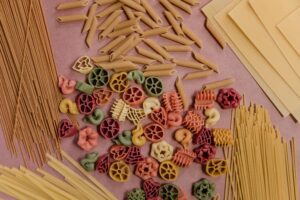
Dry pasta offers interesting shapes and textures.
Choose larger pasta shapes that are appropriate for your child’s age and always supervise closely.
Add:
- Dry pasta
- Cups
- Large spoons
- Scoops
- Bowls
Your child can sort pasta by shape, transfer it between containers, or create pretend meals.
For preschoolers:
“Can you find all the spiral shapes?”
“Which bowl has more?”
“Can you make a pattern?”
This turns a simple sensory activity into an opportunity for early mathematics and classification.
8. Cloud Dough Sensory Play
Cloud dough can provide a soft, moldable sensory experience.
A simple version can be made using flour and oil, but because ingredients and proportions can vary, parents should choose a recipe appropriate for their child’s age and supervise the activity closely.
Children can squeeze, press, crumble, and shape the material.
You can provide:
- Cups
- Spoons
- Molds
- Toy animals
- Rolling tools
The focus doesn’t need to be on creating a perfect object.
Let your child explore how the material changes when they squeeze or press it.
9. Color Sorting Sensory Bin
This activity combines sensory exploration with early learning. Fill a bin with an age-appropriate sensory base and add larger objects in several colors.
For example:
- Red
- Blue
- Yellow
- Green
Ask your child to find objects and place them into matching containers. For younger toddlers, simply naming the colors is enough.
For preschoolers, you can make it more challenging:
“Can you find three green objects?”
“Which color has the most?”
“Can you make a red-blue-red-blue pattern?”
10. Scoop and Pour Station
Sometimes you don’t need a theme at all.
Create a simple sensory station with:
- A container of rice, oats, or another suitable material
- Several cups
- Spoons
- Funnels
- Small pitchers
Then let your child experiment. Which spoon holds more? What happens when the cup is completely full? Can they pour slowly? What happens if they pour quickly?
This type of open-ended activity allows children to repeat actions and discover differences through their own experimentation.
11. Sink or Float Sensory Bin
Fill a shallow container with water and collect a selection of larger, safe objects.
Before placing each object in the water, ask:
“Do you think it will sink or float?”
Then test the prediction. Children may be surprised by the results. A small plastic cup might float while a stone sinks. A sponge might float until it becomes saturated with water.
This creates a natural opportunity to introduce words such as:
float, sink, heavy, light, wet, dry, full, empty.
12. Mystery Sensory Bin
Create a sensory guessing game. Place several familiar objects inside a container filled with a sensory material.
Invite your child to feel around and find one object without immediately looking.
You can say:
“Can you find something round?”
“Can you find the spoon?”
“What do you think you found?”
For preschoolers, you can describe an object without naming it:
“I’m thinking of something that is small, blue, and round.”
Can your child find it?
This combines sensory exploration with language, memory, and problem-solving.
How to Make Sensory Play More Engaging
You don’t need to constantly entertain your child during sensory play. In fact, one of the most valuable things you can do is give your child time to explore independently.
Try these simple strategies.
Follow Your Child’s Interest
If your child becomes fascinated by pouring water, let them pour. If they want to spend ten minutes burying animals, allow them to continue. The activity doesn’t need to look exactly the way you imagined.
Children can discover their own ways of using the materials.
Use Fewer Materials
More isn’t always better. A bin overflowing with objects can become distracting.
Sometimes a simple setup works beautifully:
Rice + cups + spoons
or
Water + sponges + containers
Start simple.
You can always add something later.
Describe Instead of Constantly Questioning
Instead of asking question after question, try describing what your child is doing.
For example:
“You’re filling the cup.”
“The water is spilling over.”
“You found the yellow truck.”
“That pinecone feels rough.”
This gives children language without making play feel like a test.
The CDC recommends using description, imitation, reflection, and active listening during child-led play.
Give Your Child Time
Some children immediately touch everything. Others may watch first. A child who doesn’t want to put their hands into a particular material doesn’t necessarily need to be pressured.
You can offer a spoon, cup, scoop, or other tool instead. Sensory experiences should be inviting, not forced.
Sensory Play for Different Ages
Sensory activities can be adapted as children grow.
Toddlers
Toddlers often benefit from simple activities involving:
- Scooping
- Pouring
- Filling
- Emptying
- Touching
- Finding
- Transferring
Keep the setup simple and provide close supervision.
Preschoolers
Preschoolers can handle more complex challenges.
Try adding:
- Sorting
- Counting
- Patterns
- Predictions
- Matching
- Simple experiments
- Pretend play
- Storytelling
For example, instead of simply providing water, ask:
“Which objects do you think will float?”
Now the child has an opportunity to make a prediction and test it.
How Long Should Sensory Play Last?
There is no perfect amount of time. Some children may stay engaged for ten minutes. Others may explore for thirty minutes or longer. Don’t worry if your child loses interest quickly. Young children naturally move between activities.
The goal is not to make a sensory bin last a certain amount of time. The goal is to provide an opportunity for meaningful exploration.
Even a short period of focused play can be valuable.
Sensory Play Doesn’t Have to Be Messy
When people hear “sensory play,” they sometimes imagine rice covering the entire kitchen floor. It doesn’t have to be that way.
Try these simple ways to reduce mess:
Use a shallow tray
A wide tray can give your child enough space while keeping materials contained.
Play outdoors
Water, sand, and nature activities are often easier to clean outside.
Use a washable mat
Place the sensory bin on a washable mat or towel.
Start with less material
A smaller amount of rice or oats is easier to clean than a giant container.
Establish a simple rule
You can teach:
“The sensory materials stay inside the bin.”
This can gradually help children practice boundaries during play.
Sensory Play Safety Tips for Parents
Sensory activities can be wonderful, but safety should always come first.
Choose materials based on your child’s age, developmental abilities, and tendency to put objects in their mouth.
Always supervise young children
Some sensory materials contain small pieces that can create choking risks.
The CDC and American Academy of Pediatrics emphasize the importance of keeping small or dangerous objects away from young children and choosing materials appropriate for their developmental stage.
Avoid small loose parts for children who mouth objects
Materials such as dry beans, small beads, tiny figurines, and similar objects may be unsafe for young children who still put things in their mouths.
Be especially careful with water beads
Water beads can expand significantly if swallowed and can cause serious health problems. The American Academy of Pediatrics recommends keeping them away from young children.
Check materials before each activity
Look for:
- Broken pieces
- Sharp edges
- Small detachable parts
- Damaged containers
- Materials that could be swallowed
Wash hands after sensory play
This is especially important when children play with outdoor materials, food-based materials, or shared play supplies.
Keep water activities closely supervised
Never leave a young child unattended with a container of water, even if it appears shallow.
When in doubt, choose a larger, simpler material and stay close.
What If My Child Doesn’t Like Certain Sensory Materials?
Not every child enjoys every sensory experience. One child may love getting their hands covered in slime. Another may immediately pull their hands away. One child may enjoy water. Another may dislike the feeling of wet sleeves.
That’s okay.
Children can have different preferences for textures, sounds, smells, and other sensory experiences. Instead of forcing participation, offer alternatives.
For example:
If your child doesn’t want to touch rice:
Offer a scoop.
If they don’t want to touch water:
Let them use a cup or sponge.
If they don’t like messy materials:
Try a dry sensory activity.
The goal is to provide opportunities for exploration—not to make every child enjoy every texture.
If you have ongoing concerns about how your child responds to sensory experiences or how those responses affect everyday activities, discuss those concerns with your child’s pediatrician or an appropriate child-development professional.
Easy Sensory Play Setup for Busy Parents
You don’t need a dedicated sensory table.
A simple setup can be created in just a few minutes.
Step 1: Choose a container
Use a shallow plastic bin, tray, or large bowl.
Step 2: Choose one sensory base
Examples include:
- Water
- Dry rice
- Oats
- Sand
- Kinetic sand
- Other age-appropriate materials
Step 3: Add a few tools
Try:
Step 4: Add a simple theme if your child enjoys themes
Animals, construction, colors, nature, or transportation can all work.
Step 5: Let your child explore
You don’t need to demonstrate every step.
Give your child time to discover what the materials can do.
A Simple Weekly Sensory Play Plan
If you’re not sure where to start, try one sensory activity each day.

Monday — Water Play -> Cups, sponges, and floating objects.
Tuesday — Rice Bin -> Scoops, cups, and hidden objects.
Wednesday — Nature Exploration -> Leaves, pinecones, and stones.
Thursday — Color Sorting -> Colored objects and matching containers.
Friday — Construction Bin -> Sensory base plus construction vehicles.
Saturday — Sink or Float -> Water and larger safe objects.
Sunday — Child’s Choice -> Repeat the activity your child enjoyed most.
Remember, you don’t need to follow a schedule perfectly.
The purpose is simply to make sensory exploration easy to include in everyday family life.
Final Thoughts
Sensory play doesn’t have to be complicated. A container, a few safe materials, and some time to explore can create a surprisingly rich learning experience for a young child.
Through sensory bins, children can scoop, pour, touch, compare, discover, imagine, and experiment. They can practice fine motor movements while learning new vocabulary.
They can explore early math concepts while filling and emptying containers. They can investigate simple science concepts while watching ice melt or testing whether objects float.
And perhaps most importantly, they can experience the simple joy of discovering something for themselves. You don’t need a perfect setup.
You don’t need expensive materials. And you don’t need to direct every moment.
Sometimes the best thing you can do is put a few interesting materials in front of your child, sit nearby, and let curiosity take the lead.
Sensory play is not about creating the perfect activity. It’s about giving children the freedom to explore their world with their whole selves.
❓Frequently Asked Questions About Sensory Bins
What age can children start using sensory bins?
Sensory exploration can begin very early, but the materials and level of supervision must be appropriate for the child’s age and development. For babies and young toddlers, choose larger, safe materials and avoid anything that could be swallowed. Always supervise closely.
What is the best material for a sensory bin?
There isn’t one best material. Water, sand, oats, rice, and other age-appropriate materials can all provide different sensory experiences. Choose based on your child’s age, interests, and safety needs.
Are sensory bins good for toddlers?
Yes. Sensory bins can provide opportunities for toddlers to practice scooping, pouring, transferring, touching, observing, and exploring. Simple setups are usually best for younger children.
Do sensory bins have to be messy?
No. Sensory play can be as simple as a water tray, a small container of oats, or a nature collection. Using a shallow tray and fewer materials can make cleanup much easier.
How often should I do sensory activities with my child?
There is no required schedule. Sensory play can be offered whenever it fits naturally into your family’s routine. Even short periods of exploration can give children opportunities to practice emerging skills.
What should I do if my child doesn’t like sensory play?
Don’t force it. Try a different texture, use tools such as scoops or cups, or offer a less messy activity. Children have individual preferences, and sensory play should feel inviting rather than stressful.
You May Also Like: https://brightkidscorner.com/sensory-play-in-early-childhood/