Introduction
Choosing children’s books can be surprisingly difficult.
Walk into any bookstore or browse an online children’s book section and you’ll find thousands of options. Some books are beautifully illustrated, some are educational, some are funny, and others are designed to help children understand emotions, routines, friendship, or the world around them.
With so many choices, parents may wonder: Which books are actually worth bringing home?
The good news is that a great children’s book doesn’t need to teach a complicated lesson or introduce advanced academic concepts. For toddlers and preschoolers, some of the most meaningful books are those that invite conversation, encourage curiosity, introduce new vocabulary, or simply create a warm moment between a child and a parent.
Reading together also gives children an opportunity to slow down and concentrate in a world that can sometimes feel full of stimulation.
In this guide, we’ve gathered some of the best books for toddlers and preschoolers, including classics, playful stories, books about emotions, books that encourage imagination, and titles that can become part of your family’s everyday reading routine.
Whether you’re looking for a new bedtime favorite, an educational book for a toddler, or a thoughtful gift for a preschooler, these recommendations can help you build a meaningful children’s book collection.
Why Books Matter During Early Childhood
Reading isn’t only about learning letters and preparing children for school. For young children, books support development in several areas at the same time.
Language Development
Listening to stories exposes children to words and sentence structures they may not hear during everyday conversations.
Repeated exposure to new vocabulary helps children gradually understand and use more words themselves.
Cognitive Development
Stories encourage children to remember characters, follow sequences, predict what might happen next, and make connections between events.
These seemingly simple experiences support early reasoning and comprehension skills.
Emotional Development
Books can help children explore feelings in a safe and understandable way.
A story about a character who is nervous about trying something new, for example, can give parents an opportunity to talk about similar emotions their child may experience.
Imagination and Creativity
Books allow children to travel to places they’ve never visited, meet imaginary characters, and experience situations beyond their everyday lives.
This type of imaginative thinking becomes an important foundation for creative problem-solving.
Parent-Child Connection
Perhaps one of the most valuable benefits of reading is the relationship it creates.
Sitting together, looking at pictures, asking questions, and sharing a story gives parents and children uninterrupted time to connect.
What Makes a Great Book for Toddlers and Preschoolers?
There isn’t one formula that makes a children’s book perfect for every child. However, there are some qualities that parents can look for when choosing books.
Engaging Illustrations
Young children often “read” pictures before they can read words.
Look for illustrations that are interesting enough to invite observation and conversation.
Ask questions such as:
“What do you see?”
“Where is the dog?”
“What do you think will happen next?”
This turns reading into an interactive experience.
Age-Appropriate Language
Books for toddlers often work best when the language is simple, rhythmic, and repetitive.
Preschoolers can usually enjoy longer stories with more complex vocabulary and plots.
Opportunities for Repetition
Children love repetition.
Don’t be surprised if your child asks you to read the same book every night for weeks. Repetition helps children become familiar with vocabulary, story structure, and characters.
Meaningful Themes
Books about family, friendship, animals, nature, emotions, everyday routines, and discovery can provide wonderful opportunities for conversation.
Interactive Elements
Some young children enjoy books with flaps, textures, sounds, or questions.
These features can be particularly engaging for toddlers, although they don’t need to be included in every book.
Best Books for Toddlers
Toddlers are still developing their attention span, vocabulary, and understanding of stories. Shorter books with engaging illustrations, repetition, and familiar concepts are often excellent choices.
Here are some popular options to consider:
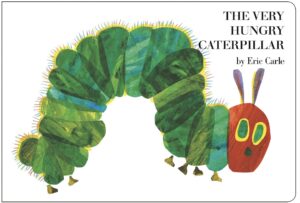
🐛 The Very Hungry Caterpillar
Best for: Ages 2–4
Eric Carle’s colorful classic follows a tiny caterpillar as he eats his way through different foods before transforming into a butterfly.
The book introduces concepts such as counting, days of the week, food, and transformation while offering highly engaging illustrations.
It’s also an excellent book for asking children questions and encouraging them to predict what comes next.
Why parents love it:
It combines a simple story with early learning concepts without feeling like a lesson.
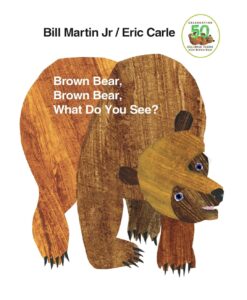
🐻 Brown Bear, Brown Bear, What Do You See?
Best for: Ages 1–4
With repetitive language and colorful animals, this book is especially appealing to young toddlers.
The predictable structure allows children to participate in the story, making it an excellent choice for early language development.
Why parents love it:
Children quickly begin anticipating the repeated phrases and may eventually “read” parts of the book along with you.
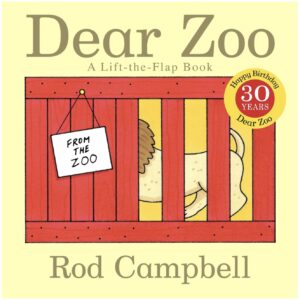
🐘 Dear Zoo
Best for: Ages 1–4
Dear Zoo is an interactive story about a child receiving animals from the zoo is filled with repetition and surprises.
The lift-the-flap format encourages children to participate actively rather than simply listening.
Why parents love it:
It’s short, engaging, and especially effective for keeping younger toddlers interested.
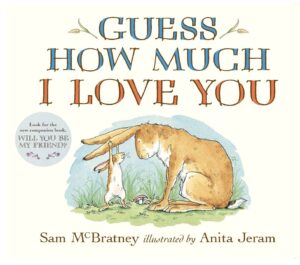
🐰 Guess How Much I Love You
Best for: Ages 2–5
This gentle story follows Little Nutbrown Hare and Big Nutbrown Hare as they try to express how much they love each other.
The emotional theme makes it particularly meaningful for parents and children.
Why parents love it:
It’s a beautiful choice for quiet reading and conversations about love, affection, and family relationships.
Best Books for Preschoolers
As children approach preschool age, they can usually follow longer stories and become increasingly interested in characters, humor, imagination, and emotional themes.
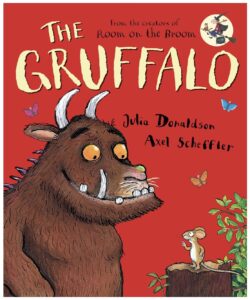
🐻 The Gruffalo
Best for: Ages 3–5
This clever story follows a mouse walking through the forest while using imagination and quick thinking to protect himself from larger animals.
The rhyming language makes it fun to read aloud.
Why parents love it:
It encourages vocabulary, storytelling, memory, and problem-solving while keeping children entertained.
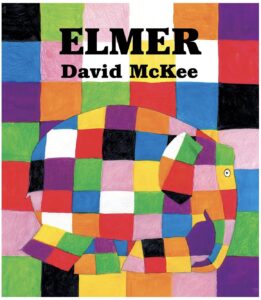
🐘 Elmer
Best for: Ages 3–5
Elmer is a colorful patchwork elephant who learns about individuality and belonging.
The story creates opportunities to discuss differences, identity, friendship, and self-acceptance.
Why parents love it:
It’s a wonderful conversation starter about what makes each person unique.
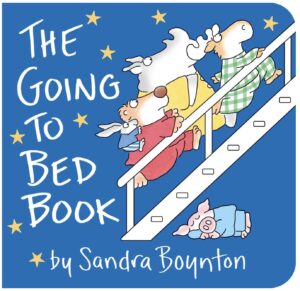
🌙 The Going to Bed Book
Best for: Ages 2–5
This playful bedtime story follows a group of animals as they prepare for sleep.
The rhythmic language and predictable sequence make it particularly suitable for bedtime routines.
Why parents love it:
It combines humor and repetition with a familiar daily routine.
Best Educational Books for Young Children
Educational books don’t have to feel like textbooks.
The most effective early learning books often introduce concepts through stories, pictures, songs, and playful repetition.
Consider books that introduce:
- Colors
- Numbers
- Shapes
- Letters
- Animals
- Nature
- Seasons
- Body parts
- Everyday routines
- Emotions
When children encounter these concepts repeatedly in different contexts, they gradually build a stronger understanding of the world.
Best Books for Teaching Children About Emotions
Helping children understand emotions can be challenging because young children don’t always have the vocabulary to explain what they’re experiencing.
Books can give parents a gentle way to introduce these conversations.
Look for stories about:
- Anger
- Fear
- Sadness
- Excitement
- Jealousy
- Friendship
- Empathy
- Confidence
- Managing frustration
After reading, try asking:
“How do you think the character feels?”
or
“Have you ever felt that way?”
There is no need to turn every story into a lesson. Sometimes simply naming emotions helps children gradually develop emotional awareness.
Best Books About Nature and the World Around Us
Books about animals, plants, weather, seasons, and nature can be particularly valuable for curious toddlers and preschoolers.
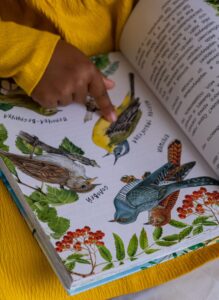
Children naturally want to understand the world around them. A story about a butterfly, for example, can lead to questions about insects, flowers, seasons, and transformation.
After reading, consider extending the experience beyond the book.
You might:
- Go outside and look for insects.
- Collect leaves.
- Plant a seed.
- Watch birds.
- Visit a local garden.
- Look at clouds together.
This is one of the beautiful ways books can inspire real-world learning.
Best Books for Encouraging Imagination
Young children have extraordinary imaginations, and books can give them endless opportunities to create their own ideas.
Open-ended stories allow children to wonder:
“What would I do?”
“Where would I go?”
“What happens next?”
After reading an imaginative story, invite your child to create their own version. They could draw a picture, build a setting with blocks, act out the story, or invent a new ending.
This type of learning through play helps transform reading from a passive activity into an active experience.
Books for Bedtime
Bedtime books deserve their own place in a child’s library. A predictable reading routine can help children transition from the busy parts of the day into a quieter period before sleep.
For bedtime, look for books with:
- Calm storylines
- Gentle illustrations
- Predictable language
- Repetition
- Shorter reading times
- Comforting themes
For more bedtime-specific recommendations, parents can also explore our guide:
Best Bedtime Books for Toddlers and Preschoolers
This creates a natural internal link between the two articles.
How Many Books Should a Child Have?
There is no ideal number.
A child doesn’t need hundreds of books to benefit from reading. In fact, keeping a smaller selection accessible can make it easier for young children to choose independently.
You can keep some books in storage and rotate them periodically. This works similarly to toy rotation: familiar books can feel exciting again when they return after a few weeks.
A small bookshelf with approximately 10–15 accessible books can provide plenty of variety while keeping the environment manageable.
How to Create a Montessori-Inspired Reading Corner
If your family follows Montessori principles, consider creating a small reading area where books are easily accessible.
You don’t need a dedicated room.
A simple corner with:
- A low bookshelf
- A soft rug
- A comfortable floor cushion
- A small basket of books
- Good lighting
can become a beautiful reading environment.
Display books with their covers facing outward whenever possible. This makes it easier for young children to recognize and choose books independently.
The goal isn’t to create a picture-perfect reading nook. It’s to make books visible, accessible, and inviting.
Should Parents Read the Same Book Repeatedly?
Absolutely.
If your child wants to hear the same story every night, there’s no need to discourage it. Repetition helps children recognize words, remember story sequences, anticipate what happens next, and participate more actively.
You may eventually notice your child “reading” certain pages from memory. This isn’t simply memorization. It’s an important step toward understanding how stories and language work.
So when your child asks:
“Again?”
you don’t necessarily need a new book.
Sometimes the familiar favorite is exactly what they need.
How to Make Reading More Interactive
You don’t need to stop every few seconds to ask questions. Instead, allow the interaction to happen naturally.
Try:
-Before Reading
Look at the cover together.
Ask:
“What do you think this book is about?”
-During Reading
Point out interesting details.
“Look at the little bird!”
-After Reading
Ask an open-ended question.
“What was your favorite part?”
For toddlers, even pointing, naming objects, making animal sounds, or turning pages can make reading interactive.
Recommended Products for a Child’s Reading Corner
Creating a reading-friendly environment doesn’t require many products, but a few thoughtfully chosen items can make books more accessible and enjoyable.
Our Favorite Reading Essentials
- Front-facing children’s bookshelf
- Montessori book basket
- Soft floor cushion
- Children’s reading chair (option 1, option 2, option 3)
- Washable playroom rug (option 1, option 2, option 3)
- Bookends
- Adjustable reading lamp
- Board books for toddlers
- Picture books for preschoolers
Tip for parents: Choose products based on your child’s age, safety, available space, and actual needs rather than purchasing everything at once.
This is also a natural place within your article to add your affiliate links.
How to Build a Lifelong Love of Reading
Perhaps the most important thing parents can do is avoid turning reading into a chore. Children don’t need to finish a certain number of pages every night or answer comprehension questions after every story.
Instead, let books become associated with comfort, curiosity, connection, and enjoyment.
- Read on the couch.
- Read before bed.
- Read while waiting for an appointment.
- Read outside.
Let your child choose the book—even if you’ve read it 50 times.
When children see adults enjoying books and discover that reading can be relaxing and exciting, they begin to develop a positive relationship with books that can last for years.
❓ Frequently Asked Questions
What are the best books for toddlers?
The best books for toddlers are usually short, engaging, and age-appropriate, with simple language, repetition, and interesting illustrations. Books about animals, everyday routines, emotions, and familiar experiences are often particularly appealing.
What books should a 2-year-old read?
Two-year-olds often enjoy board books, repetitive stories, interactive books, and books featuring animals, colors, vehicles, and everyday experiences.
What are good books for 3-year-olds?
Three-year-olds can begin enjoying longer stories, rhyming books, imaginative stories, and books that explore emotions, friendship, nature, and problem-solving.
How often should I read to my child?
Reading every day is wonderful, but consistency matters more than a specific number of minutes. Even a short daily reading routine can become a meaningful part of family life.
Should toddlers have access to books independently?
Yes. Keeping a small selection of age-appropriate books within your child’s reach can encourage independent exploration and support a positive relationship with reading.
Should I choose educational books or storybooks?
You don’t have to choose one or the other. A healthy children’s library can include both educational books and stories chosen simply because they’re fun and enjoyable.
Final Thoughts
The best books for toddlers and preschoolers aren’t necessarily the newest, most expensive, or most educational titles. They’re the books that make children curious. They’re the stories they ask to hear again. They’re the books that lead to questions, laughter, imagination, and meaningful conversations.
Most importantly, books create something that goes beyond vocabulary and early academic skills: connection. A few minutes spent reading together each day can become one of the most cherished parts of childhood.
So choose books that interest your child, keep them accessible, make reading part of your everyday routine, and don’t be afraid to read the same favorite story again and again.
Because sometimes, the book your child wants to hear for the hundredth time is exactly the book that is helping them learn the most.